Smart devices are becoming increasingly common in homes, offices, and personal routines. From smart speakers and thermostats to wearable technology and connected lighting systems, these devices promise convenience, automation, and improved efficiency.
However, many users still wonder whether smart devices truly add value or simply introduce unnecessary complexity. Some people adopt them quickly, while others hesitate due to privacy concerns, cost, or compatibility issues.
This article explores whether smart devices are worth using by examining real-life benefits, limitations, and practical use cases. The goal is to provide a balanced, experience-driven perspective that helps readers understand how smart devices fit into everyday life.
What Are Smart Devices?
Smart devices are electronic products that connect to the internet or local networks and can be controlled remotely or automated. They often communicate with mobile apps, voice assistants, or other connected devices.
Common categories include:
- Smart speakers
- Smart lighting systems
- Smart thermostats
- Smart security cameras
- Wearable devices
- Smart plugs and switches
These devices typically rely on wireless communication technologies such as Wi-Fi, Bluetooth, or low-power protocols designed for home automation.
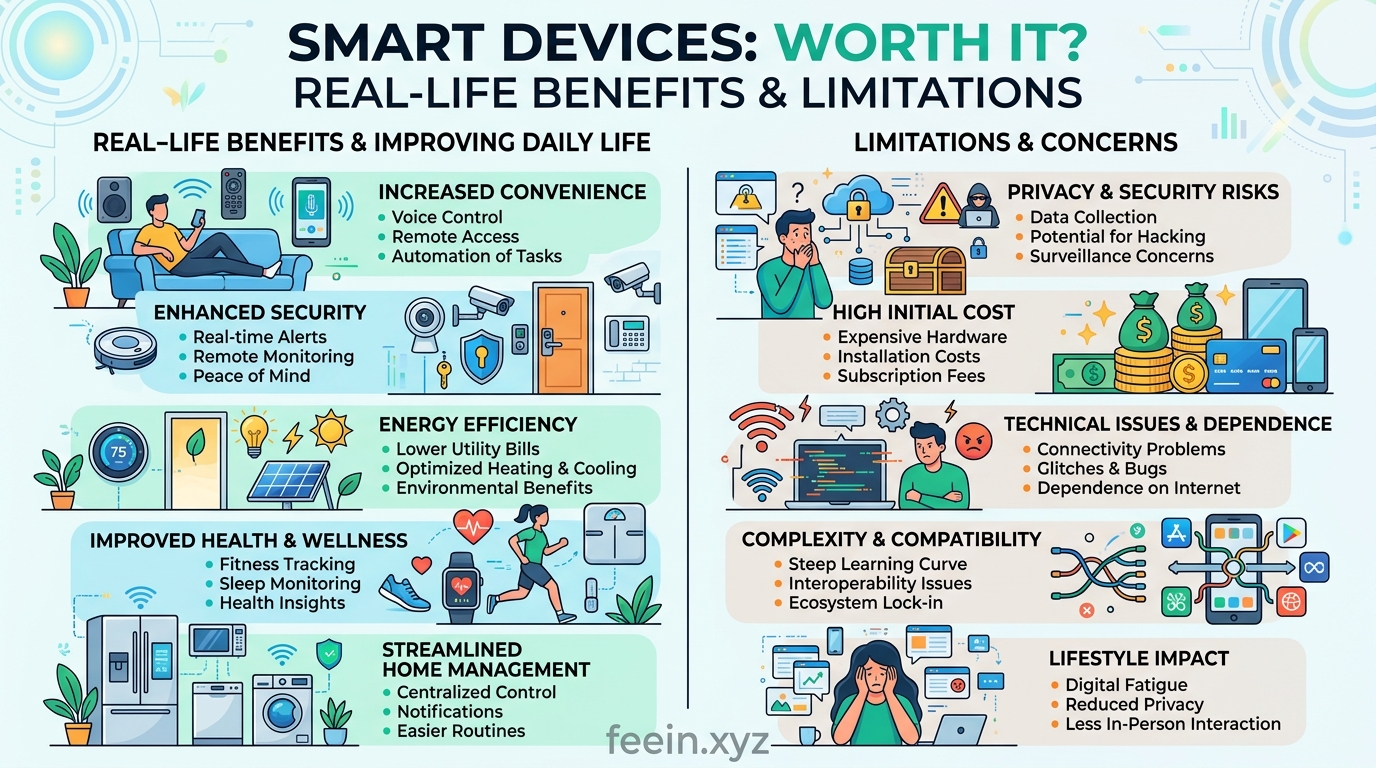
Real-Life Benefits of Smart Devices
1. Convenience in Daily Routines
One of the most noticeable benefits is convenience. Smart devices allow users to control multiple functions without manual interaction.
For example:
- Turning off lights using a phone or voice command
- Adjusting room temperature remotely
- Scheduling appliances to run automatically
These small improvements reduce repetitive tasks and simplify daily routines.
2. Energy Efficiency and Cost Awareness
Many smart devices help monitor energy usage. Smart thermostats, lighting systems, and plugs allow users to track consumption patterns and adjust settings accordingly.
Real-world scenario:
A user installs smart lighting and schedules lights to turn off automatically at night. Over time, unnecessary electricity use decreases, and the user becomes more aware of consumption habits.
While savings vary, the ability to monitor usage encourages more efficient behavior.
3. Improved Home Security
Smart security devices offer remote monitoring and alerts.
Examples include:
- Motion detection cameras
- Smart door sensors
- Video doorbells
- Smart locks
These systems notify users when unusual activity is detected, providing additional awareness even when away from home.
4. Accessibility and Assistance
Smart devices can assist individuals with limited mobility or busy schedules.
Examples:
- Voice-controlled lights reduce the need to reach switches
- Smart reminders help manage daily tasks
- Wearables track health metrics and activity levels
These features make technology more accessible and supportive.
5. Device Integration and Automation
Smart devices can work together through automation rules.
Example automation:
- Motion detected → lights turn on
- Door unlocked → thermostat adjusts
- Alarm activated → cameras start recording
This type of integration creates a connected environment that adapts automatically.
Limitations of Smart Devices
While smart devices offer advantages, they also have limitations that users should consider.
1. Initial Setup Complexity
Some devices require configuration, apps, and account setup. For beginners, this process may take time.
However, once configured, daily use becomes simpler.
2. Internet Dependency
Many smart devices rely on internet connectivity. If the connection is unstable, certain features may not function.
Some devices offer limited offline capabilities, but not all.
3. Compatibility Challenges
Not all smart devices work seamlessly together. Different brands may use different ecosystems or standards.
Before purchasing, users should check:
- platform compatibility
- supported integrations
- app requirements
4. Privacy and Security Considerations
Connected devices collect data to function properly. This raises privacy concerns for some users.
To reduce risks:
- use strong passwords
- enable two-factor authentication
- update device firmware
- review privacy settings
Following these practices helps maintain security.
Real-Life Use Cases
Morning Routine Automation
A user sets up a routine where:
- lights gradually turn on
- thermostat adjusts temperature
- smart speaker provides weather updates
This reduces the need for manual adjustments and creates a smoother start to the day.
Remote Home Monitoring
While traveling, a user receives alerts from smart cameras. They can view live footage and confirm that everything is normal.
This provides reassurance without requiring physical presence.
Energy Management Example
Smart plugs track appliance usage. A user notices a device consuming more power than expected and adjusts usage habits.
Over time, this awareness improves efficiency.
When Smart Devices May Not Be Necessary
Smart devices may not be essential in every situation. For example:
- Small spaces with minimal automation needs
- Users who prefer manual control
- Limited internet reliability
- Budget constraints
In these cases, traditional devices may still be sufficient.
Tips Before Buying Smart Devices
To maximize value:
Start Small
Begin with one or two devices instead of building a full system immediately.
Choose Compatible Devices
Check whether devices support common platforms.
Focus on Real Needs
Select devices that solve specific problems.
Keep Security in Mind
Use secure networks and update devices regularly.
Are Smart Devices Worth It?
Smart devices can provide meaningful benefits when used thoughtfully. They improve convenience, enable automation, and increase awareness of energy use and security.
However, they are most valuable when chosen based on practical needs rather than novelty. Users who start small and build gradually often experience the best results.
Understanding both the advantages and limitations helps determine whether smart devices are a worthwhile addition.
FAQ
Are smart devices difficult to use?
Most devices are designed for ease of use. Initial setup may take time, but daily operation is usually simple.
Do smart devices save energy?
Some devices help reduce unnecessary usage, though results depend on user habits and configuration.
Are smart devices secure?
Security depends on proper setup, strong passwords, and regular updates.
Do smart devices work without internet?
Some features may work locally, but many rely on internet connectivity.
Smart devices are not just trends — they are tools designed to improve everyday life. When used strategically, they enhance convenience, support automation, and provide useful insights into daily routines.