Renewable energy is no longer an alternative solution — it is becoming the backbone of the global energy system. As governments push for carbon neutrality and businesses invest in sustainable infrastructure, renewable technologies are advancing faster than ever.
We explore the most promising renewable energy technologies, compare their efficiency and costs, and analyze how they will shape the energy market through 2030.
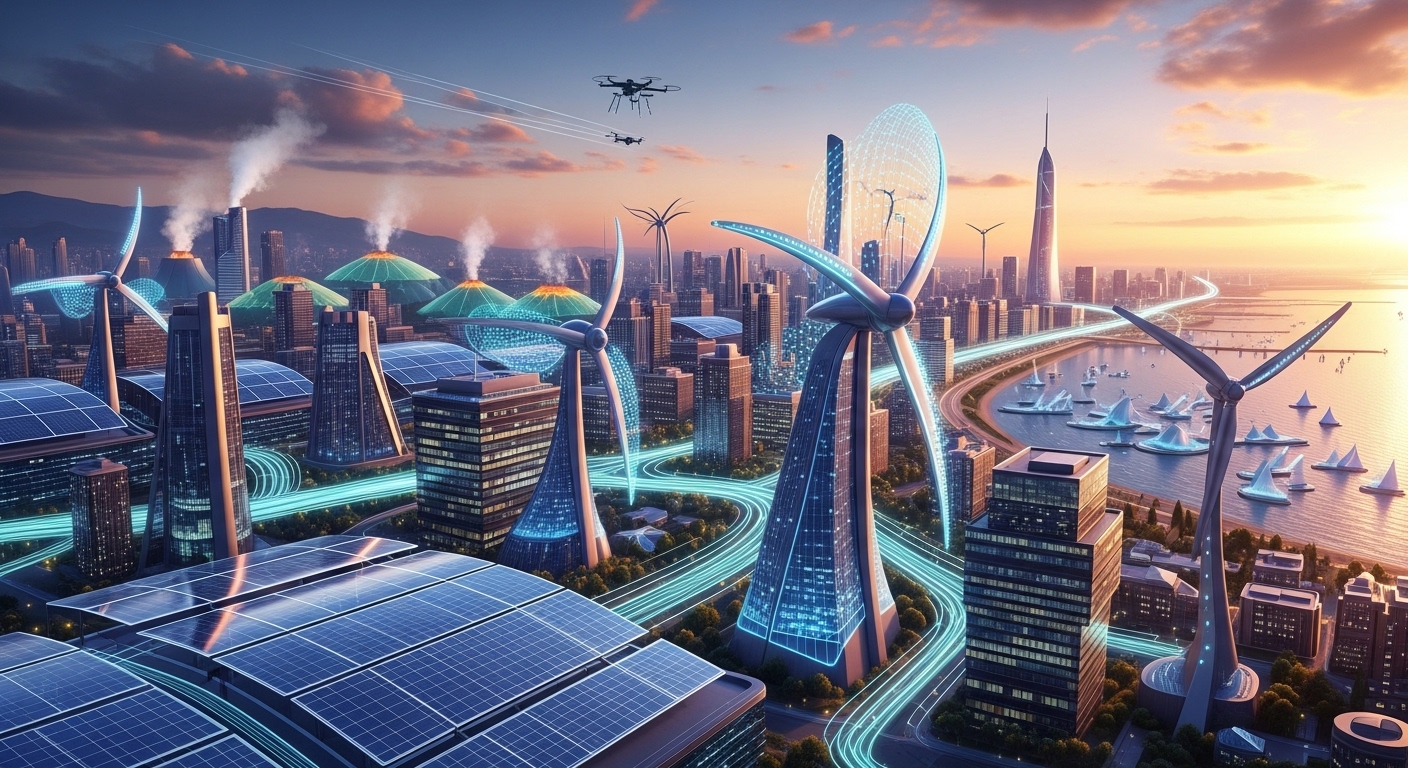
1. Solar Energy: Smarter and More Efficient Than Ever
Solar technology continues to dominate renewable energy investments worldwide. Advances in perovskite solar cells and bifacial panels are dramatically increasing efficiency rates.
Key Solar Technology Improvements
| Technology Type | Efficiency Rate | Average Cost (2026 est.) | Lifespan |
|---|---|---|---|
| Monocrystalline Panels | 20–23% | $0.90–$1.20 per watt | 25–30 years |
| Polycrystalline Panels | 15–18% | $0.70–$1.00 per watt | 20–25 years |
| Perovskite Solar Cells | 25–30% (lab-tested) | Expected to decrease rapidly | 20+ years |
Solar Growth Projection (Chart Data)
You can insert a line chart with the following data:
Global Solar Capacity Growth (GW)
-
2022: 1050 GW
-
2023: 1200 GW
-
2024: 1450 GW
-
2025: 1750 GW
-
2026 (projected): 2100 GW
This visual shows accelerating adoption and long-term growth stability.
2. Wind Energy: Offshore Expansion and Smart Turbines
Wind energy is entering a new phase with offshore wind farms and AI-powered turbine optimization.
Onshore vs Offshore Wind Comparison
| Feature | Onshore Wind | Offshore Wind |
|---|---|---|
| Installation Cost | Lower | Higher |
| Energy Output | Moderate | Very High |
| Maintenance | Easier | Complex |
| Environmental Impact | Land-based | Marine ecosystem considerations |
Offshore turbines are now reaching capacities above 15 MW per turbine, significantly increasing output per installation.
Wind Energy Market Forecast (Insert Bar Chart)
Data suggestion:
-
2022: $120B
-
2023: $135B
-
2024: $150B
-
2025: $170B
-
2026: $195B
3. Energy Storage: The Real Game Changer
Renewables depend heavily on storage technology to solve intermittency issues.
Battery Technology Comparison
| Storage Type | Efficiency | Lifespan | Best Use Case |
|---|---|---|---|
| Lithium-Ion | 85–95% | 10–15 years | Residential & EV |
| Solid-State | 95%+ | 15–20 years | Future EV & Grid |
| Flow Batteries | 70–85% | 20+ years | Large Grid Storage |
| Hydrogen Storage | 40–60% | Long-term | Industrial backup |
Energy storage investment is expected to grow by over 20% annually through 2030.
4. Green Hydrogen: Industrial Transformation
Hydrogen produced using renewable electricity (green hydrogen) is gaining attention in heavy industries.
Why Green Hydrogen Matters
-
Reduces industrial emissions
-
Supports clean transportation
-
Enables seasonal energy storage
Hydrogen Cost Decline Projection
| Year | Cost per kg |
|---|---|
| 2022 | $5–6 |
| 2024 | $4–5 |
| 2026 | $3–4 |
| 2030 (Projected) | $2–3 |
As production scales, hydrogen could become competitive with fossil fuels.
5. AI and Smart Grids in Renewable Energy
Artificial Intelligence is optimizing renewable power distribution.
Smart Grid Benefits
-
Real-time demand balancing
-
Reduced power outages
-
Improved grid efficiency
-
Lower operational costs
Countries investing in smart grids are seeing up to 15% efficiency improvements.
Real-World Applications
Case Example: Residential Solar + Battery System
Homeowners combining solar panels with lithium storage systems can:
-
Reduce electricity bills by 60–80%
-
Achieve partial energy independence
-
Protect against power outages
Case Example: Industrial Hydrogen Adoption
Heavy industries using hydrogen are lowering carbon footprints while preparing for stricter regulations.
Challenges Facing Renewable Energy
Despite progress, challenges remain:
-
High upfront costs
-
Infrastructure upgrades
-
Supply chain dependency
-
Rare mineral sourcing
However, technological innovation continues to address these barriers.
Renewable Energy Investment Outlook (2026–2030)
Projected annual growth rate: 8–12%
Investment Breakdown by Sector (2026 Estimate)
| Sector | Investment Share |
|---|---|
| Solar | 38% |
| Wind | 30% |
| Storage | 18% |
| Hydrogen | 10% |
| Other | 4% |
This diversified investment pattern signals long-term stability.
Frequently Asked Questions
Is renewable energy cheaper than fossil fuels?
In many regions, solar and wind are already cheaper than coal and gas when considering long-term operating costs.
Which renewable energy source is growing fastest?
Solar energy currently leads global expansion due to declining manufacturing costs.
Will renewable energy replace fossil fuels completely?
While full replacement will take decades, renewables are expected to dominate new energy capacity installations.
The future of renewable energy technologies is defined by efficiency improvements, storage breakthroughs, and smart grid integration. Solar, wind, hydrogen, and battery innovations are shaping a more sustainable and resilient global energy system.
For readers interested in technology transformation and clean energy investment opportunities, renewable energy is not just a trend — it is the foundation of the next energy revolution.