
Introduction
Smart thermostats have revolutionized the way we control home heating and cooling. Unlike traditional thermostats, these devices learn your habits, connect to your smartphone, and optimize energy usage automatically.
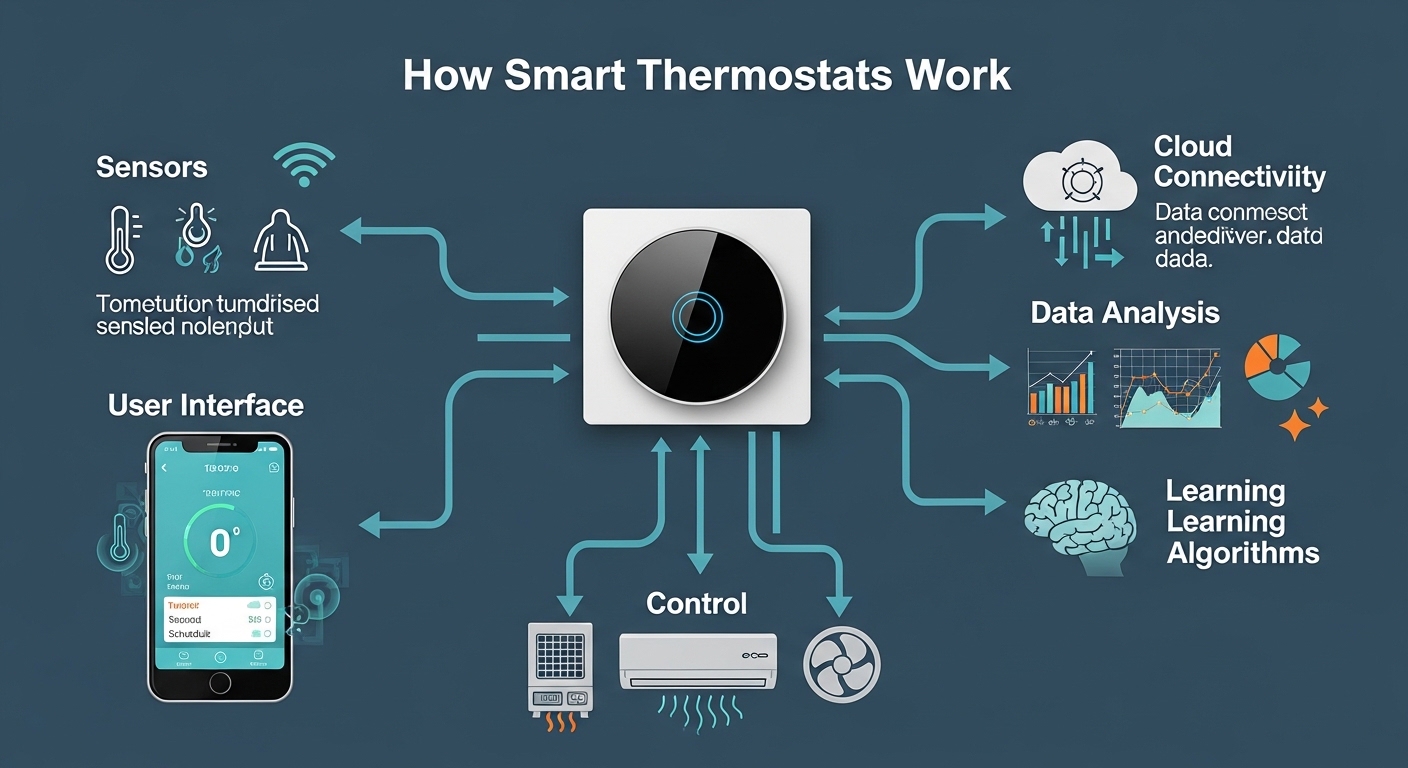
In this guide, we’ll explain how smart thermostats work, their main features, benefits, and tips for getting the most out of them.
What Is a Smart Thermostat?
A smart thermostat is a connected device that allows homeowners to control their heating and cooling systems remotely. It uses sensors, Wi-Fi connectivity, and sometimes AI to adjust temperature settings automatically for comfort and energy savings.
Key features include:
-
Remote control via smartphone apps
-
Learning user schedules and preferences
-
Integration with smart home systems like Alexa or Google Home
How Smart Thermostats Work
Smart thermostats use several technologies to operate efficiently:
Sensors
-
Detect temperature, humidity, and occupancy
-
Some advanced models detect when you are home or away
Connectivity
-
Connect to your Wi-Fi network
-
Send and receive data from your smartphone app
-
Receive software updates for improved functionality
Algorithms and Learning
-
Some smart thermostats learn your schedule over time
-
Automatically adjust heating/cooling based on patterns
-
Can reduce energy usage while maintaining comfort
Benefits of Using a Smart Thermostat
Smart thermostats offer several advantages for homeowners:
-
Energy Efficiency – Reduce unnecessary heating/cooling when no one is home
-
Cost Savings – Lower energy bills through optimized settings
-
Convenience – Control your home temperature from anywhere
-
Integration – Work with smart home systems for automation
-
Environmental Impact – Reduced energy consumption helps the planet
Common Features to Look For
When choosing a smart thermostat, consider these features:
-
Remote App Control – Adjust settings from your smartphone
-
Scheduling – Pre-set temperature routines for daily life
-
Learning Capabilities – Device adapts to your lifestyle
-
Energy Reports – Track usage and savings
-
Geofencing – Adjusts temperature automatically when you leave or arrive
Tips for Optimizing Your Smart Thermostat
-
Place sensors correctly – Avoid direct sunlight or vents
-
Connect to your smart home system – For full automation
-
Update firmware regularly – Ensures security and new features
-
Use schedules intelligently – Balance comfort with energy savings
FAQ
Q1: Are smart thermostats worth the cost?
A1: Yes. Most users save money on energy bills and gain convenience, making the investment worthwhile over time.
Q2: Can I install a smart thermostat myself?
A2: Many models are designed for DIY installation, but consult your HVAC professional if unsure.
Q3: Do smart thermostats work with all heating and cooling systems?
A3: Most work with standard HVAC systems, but check compatibility before purchasing.
Q4: Can smart thermostats help the environment?
A4: Yes. By optimizing energy usage, they reduce unnecessary heating and cooling, lowering your carbon footprint.
Conclusion
Smart thermostats combine technology, convenience, and energy efficiency in one device. By understanding how they work and using their features effectively, homeowners can maintain comfort, save money, and reduce their environmental impact.