
Introduction
Technology is becoming more connected every year. From smart thermostats that adjust room temperature automatically to wearable fitness trackers that monitor daily activity, many everyday devices are now able to communicate through the internet. This growing network of connected devices is known as the Internet of Things (IoT).
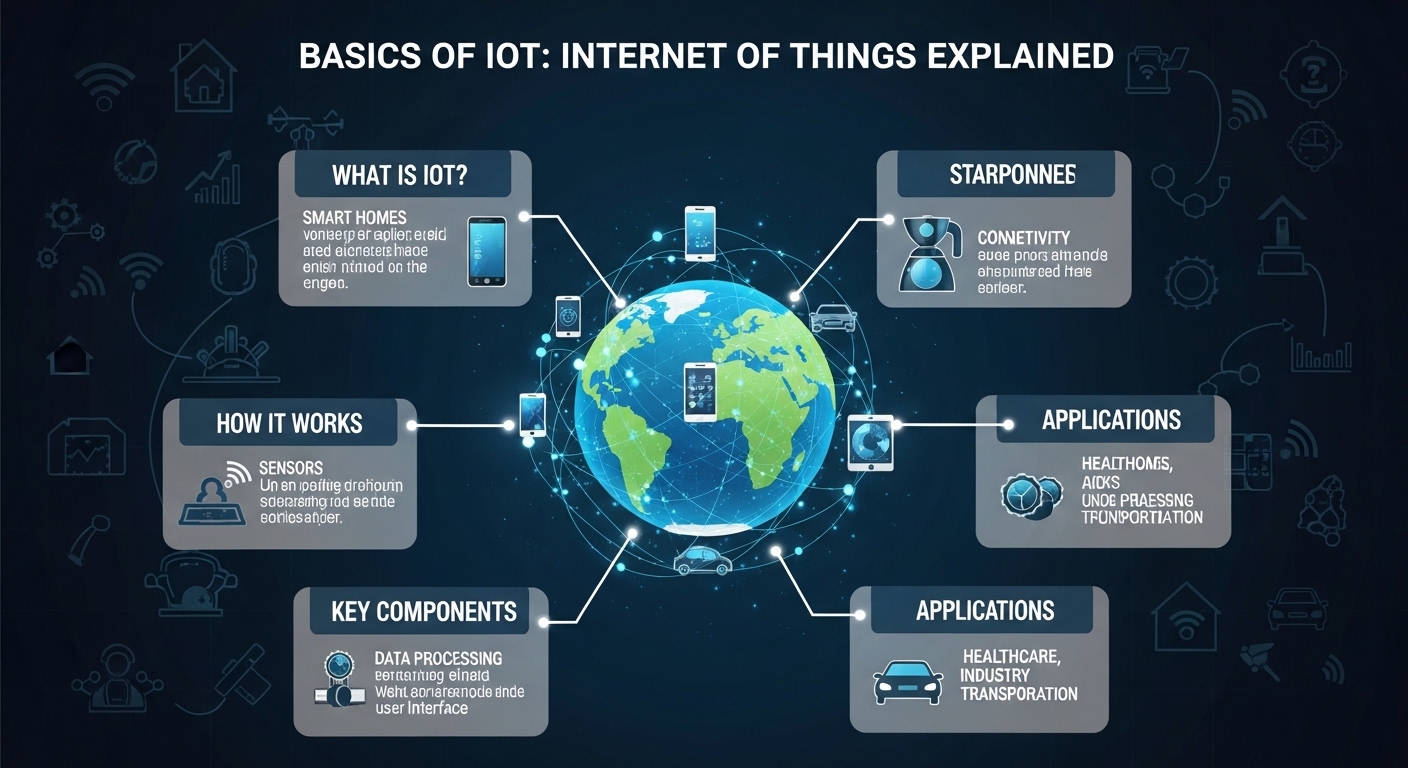
In this guide, we will explain what IoT is, how it works, where it is used, and what challenges come with it. The goal is to provide a clear and simple understanding, especially for readers who are new to the topic.
What Is the Internet of Things (IoT)?
The Internet of Things (IoT) refers to a system of physical devices that are connected to the internet and can collect, share, and sometimes act on data.
These devices are not limited to computers or smartphones. IoT includes everyday objects such as:
-
Smart home appliances
-
Wearable health devices
-
Connected vehicles
-
Industrial sensors
-
Security cameras
-
Smart lighting systems
What makes a device part of IoT is its ability to:
-
Collect information using sensors
-
Send that data over the internet
-
Receive instructions or trigger actions
In simple terms, IoT allows devices to “talk” to each other and exchange information without constant human involvement.
How Does IoT Work?
Although IoT may sound complex, its basic structure follows a simple process.
1. Data Collection
IoT devices use sensors to collect data from their environment. For example:
-
A temperature sensor measures room heat.
-
A motion sensor detects movement.
-
A fitness tracker records heart rate and steps.
2. Data Transmission
The collected data is sent through a network connection. This could be:
-
Wi-Fi
-
Bluetooth
-
Cellular networks
-
Low-power wide-area networks (LPWAN)
3. Data Processing
Once the data reaches a server or cloud platform, it is processed and analyzed. The system decides whether action is needed.
4. Action or Response
After processing, the device may:
-
Send an alert to a user
-
Adjust settings automatically
-
Trigger another connected device
For example, if a smart thermostat detects a temperature drop, it can automatically turn on heating.
Common Examples of IoT in Daily Life
IoT is already present in many homes and workplaces. Some common examples include:
Smart Home Devices
-
Smart thermostats
-
Voice assistants
-
Smart locks
-
Connected lighting systems
Wearable Technology
-
Fitness trackers
-
Smartwatches
-
Health monitoring bands
Smart Cities
-
Traffic monitoring systems
-
Smart parking solutions
-
Environmental sensors
Industrial IoT (IIoT)
-
Equipment monitoring sensors
-
Predictive maintenance systems
-
Automated production lines
These applications show how IoT is not limited to one industry. It is used in homes, healthcare, transportation, manufacturing, and more.
Benefits of IoT
IoT offers several practical advantages when implemented correctly.
1. Automation
Devices can perform tasks automatically without constant supervision.
2. Efficiency
Connected systems can optimize energy usage, reduce waste, and improve workflow.
3. Real-Time Monitoring
Users can monitor devices and systems instantly from anywhere with internet access.
4. Data-Driven Decisions
Businesses and individuals can analyze collected data to make informed decisions.
5. Improved Convenience
Daily tasks become easier with smart devices that respond to user preferences.
Challenges and Risks of IoT
While IoT brings many benefits, it also presents challenges that users should understand.
1. Security Risks
Connected devices can be vulnerable to cyberattacks if not properly secured.
2. Privacy Concerns
Devices that collect personal data may raise concerns about how information is stored and used.
3. Compatibility Issues
Not all devices are compatible with each other, which can limit integration.
4. Dependence on Internet Connectivity
IoT systems rely heavily on stable internet connections.
5. Maintenance Requirements
Regular updates and security patches are necessary to keep devices functioning safely.
Being aware of these challenges helps users make responsible and informed decisions.
Key Components of an IoT System
An IoT system typically includes:
-
Sensors and Devices – Collect data
-
Connectivity – Transfers data
-
Cloud or Data Platform – Stores and processes information
-
User Interface – Allows users to monitor and control devices
Each component plays an important role in ensuring smooth operation.
The Future of IoT
The Internet of Things continues to grow as technology improves. Future developments may include:
-
Smarter healthcare monitoring systems
-
More efficient energy management solutions
-
Advanced agricultural monitoring
-
Enhanced industrial automation
As connectivity becomes faster and more secure, IoT systems are likely to expand into new areas of everyday life.
Conclusion
The Internet of Things (IoT) represents a major shift in how devices interact with each other and with us. By connecting physical objects to the internet, IoT enables automation, real-time monitoring, and smarter decision-making.
At the same time, understanding its risks—especially related to security and privacy—is important for responsible use.
Whether in homes, businesses, or cities, IoT is becoming a central part of modern technology. Learning the basics helps individuals and organizations better understand how these systems work and how they may continue evolving in the future.
Frequently Asked Questions (FAQ)
What does IoT stand for?
IoT stands for Internet of Things, which refers to connected devices that communicate through the internet.
Is IoT only used in smart homes?
No. IoT is used in industries such as healthcare, manufacturing, transportation, and agriculture.
Are IoT devices safe?
They can be safe if properly secured, updated regularly, and protected with strong passwords and secure networks.
Do IoT devices always require internet access?
Most IoT devices rely on internet connectivity to transmit and receive data.